For generations, we’ve been told that some children simply arrive without a past.
Found under cabbage leaves. Delivered by storks. Discovered on doorsteps. They’re given names, assigned numbers, and placed into families that never bore them. The story rarely asks where they came from. It only asks that we accept where they’ve ended up.

Look closely at folklore, literature, and institutional records, and a pattern surfaces that runs across centuries and continents. Myth and bureaucracy repeat the same theme, in different clothing: children without origin, made ordinary through narrative.
The Foundling Mechanism

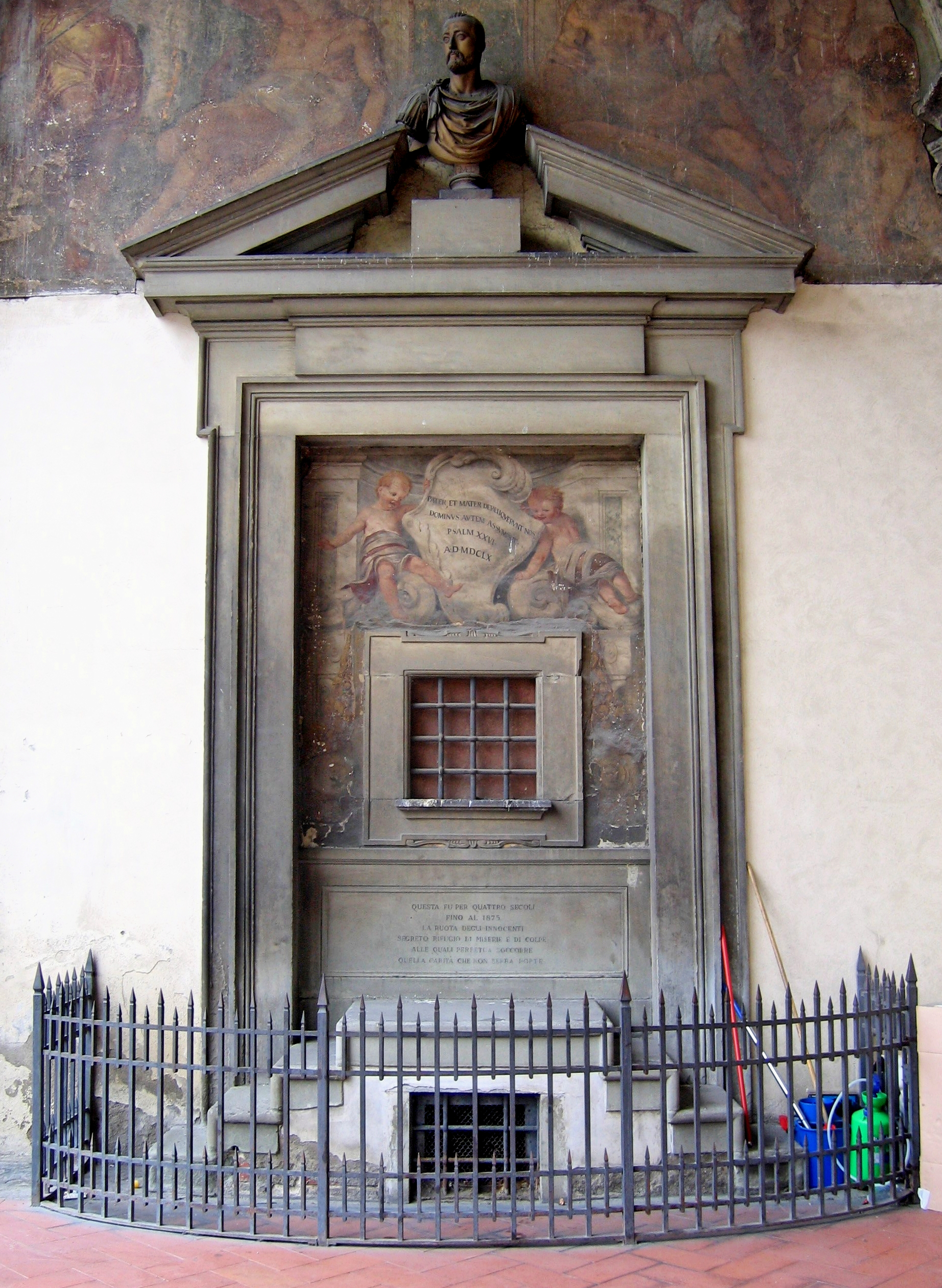
In the 18th and 19th centuries, foundling hospitals operated across Europe and North America. London’s Foundling Hospital, established by Thomas Coram in 1739 with support from William Hogarth and George Frideric Handel, took in infants through a foundling wheel, a revolving hatch built into an outer wall that let a child be passed inside without anyone seeing who left them.
Mothers who wished to reclaim a child were encouraged to leave a token, a coin, a ribbon, a scrap of fabric, folded into the admission paperwork. Children were renamed on arrival, so the token was often the only thread back to the woman who left them. Historians Janette Bright and Gillian Clark, working from the Hospital’s surviving billet books, have traced individual tokens to named mothers and children across two centuries of archive material.

The system worked in principle and rarely in practice. Of more than 16,000 foundlings admitted in London between 1741 and 1760, only 152 were ever reunited with a parent. When some tokens were later put on public display, no one recorded which object belonged to which billet, so the tokens became separated from the children they were meant to identify. It took Bright and Clark more than a decade to begin matching them back.
Europe’s wheels tell the same story from another angle. A study of Italian provincial records by economists Giuliana Freschi and Marco Molteni found that when a province closed its ruota, recorded child abandonment fell by nearly 55 percent almost overnight, and births fell by around 4 percent. The anonymity had been doing real demographic work. Remove it, and the numbers it concealed became visible.
None of this proves institutions manufactured children rather than receiving them. It shows a system built to make origin unaskable by design, one that worked exactly as intended for the parents who used it, and failed at the one task it claimed to guarantee: bringing children back to where they came from.
Changelings and Cabbages


Long before state-run institutions existed, cultures already had language for a child who didn’t quite belong. In Celtic and Germanic folklore, the changeling was a child taken by spirits and replaced with something that only resembled human. It cried without stopping, failed to grow, or refused to speak. Left in its cradle wrapped in moss or leaves, the changeling was a reminder that a child’s origin could never be fully trusted.
In France, by the 1700s, the story took a gentler shape. Boys came from cabbage patches, girls from rose bushes. It gave parentage a shape that required no explanation, turning an uncomfortable question into a garden.
Both myths carry the same undertone. A child can arrive through hidden means, wrapped in a story rather than a lineage, and the story is what the culture agrees to hold onto.
Incubator Babies and World’s Fair Spectacles


By the late 1890s the story had moved into public view. At Coney Island, Atlantic City, and a string of World’s Fairs across America, premature infants were displayed in glass incubators for paying visitors. The showman behind most of these exhibits called himself Dr. Martin Couney. His name, his medical degree, and much of his personal history were invented. Journalist Dawn Raffel’s research, and the earlier work of neonatologist William Silverman, established that Couney was born Michael Cohn in Prussian Poland and had no real medical qualification.
The babies themselves were named and mostly returned to their families once stabilized. What Couney built worked regardless: hospitals of the period routinely turned away premature infants as too fragile to survive, and his incubator shows are credited with saving an estimated 6,500 to 7,000 lives over four decades.
The strangeness is that saving those children meant putting them on display beside sword swallowers and bearded ladies, in a show run by a man who had invented his own name along with theirs. A society capable of building a neonatal ward chose, for decades, to keep the technology at a fairground instead.
The First Film Tells the Story Again
In 1896, French filmmaker Alice Guy-Blaché directed what is widely considered the first narrative film ever made. It was called La Fée aux Choux, The Fairy of the Cabbages. In the short silent piece, a fairy walks through a cabbage patch, lifting babies from beneath the leaves and handing them to waiting couples. There is no birth, no mother, no history. Only harvest and distribution.
The imagery is playful, but it repeats the same reassurance as the incubators a few years later: that a child could be produced, cared for, and delivered without any burden of ancestry attached. The story of skipping the past had already found its way onto film before the century that would make it a habit had even started.
The Literature of Orphans

While institutions handled the paperwork, literature handled the memory. From the mid-19th century onward, stories of orphans filled Western publishing. Oliver Twist, Jane Eyre, Huckleberry Finn, Anne of Green Gables, The Secret Garden, each one a child without a family or a history who found a place in the world anyway.
The orphan became a stock figure for resilience and integration. Where the child came from mattered less than where they ended up. Lineage, in this telling, was optional. Identity was whatever the story assigned.
This is also the period the American orphan trains and Britain’s Home Children scheme moved an estimated 350,000 children between them across two continents, with record-keeping thin enough in places that many of those children’s origins were never reliably traced either.
Cabbage Patch Kids and the Final Sanitization

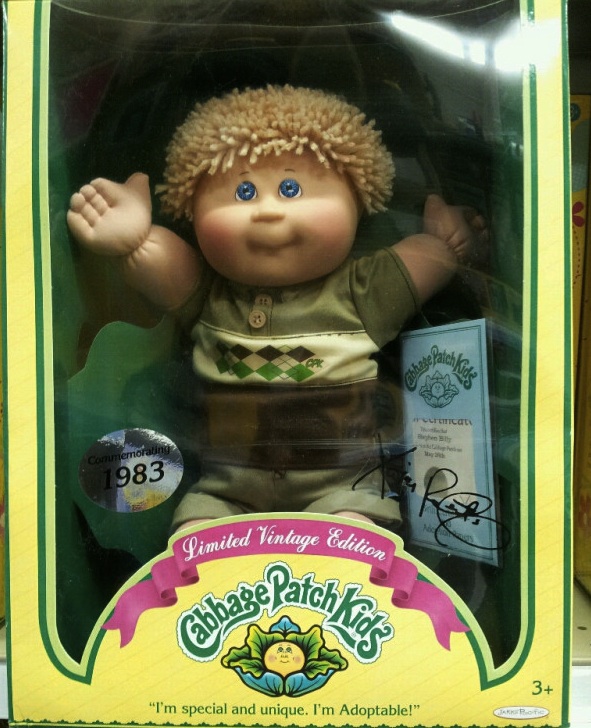
By the 1980s, the story had circled back to its softest form. Cabbage Patch Kids, round-faced dolls with fabric bodies, came with adoption papers and no parents. Each was said to be born in a magical garden and discovered by a gentle caretaker, waiting to be claimed.
The marketing was clever, but the symbolism was older than the toy. The cabbage patch had become the foundling wheel again, reimagined in felt and yarn. Each doll arrived without a past, only a name and a future, and every child who brought one home signed the papers without asking what they meant.
The Pattern That Remains

Every version of this story ends the same way. Someone accepts the child, and no one asks the question that would unravel it.
It happens at the door of a foundling hospital, in the moment a token is folded into a billet and never looked at again. It happens at a fairground, where a crowd pays to see a baby with no history saved in a glass box by a man who has no history of his own. It happens in a nursery, where a doll arrives with adoption papers and a garden it was supposedly grown in, and a child signs for it without a second thought.
None of this is proof of anything hidden. It might be nothing more than kindness, or convenience, or the plain fact that a baby in front of you is easier to love than a mystery behind them. But the pattern holds regardless of what explains it. The record does show how often, when a population changes quickly, a story arrives to explain the children left standing in it.